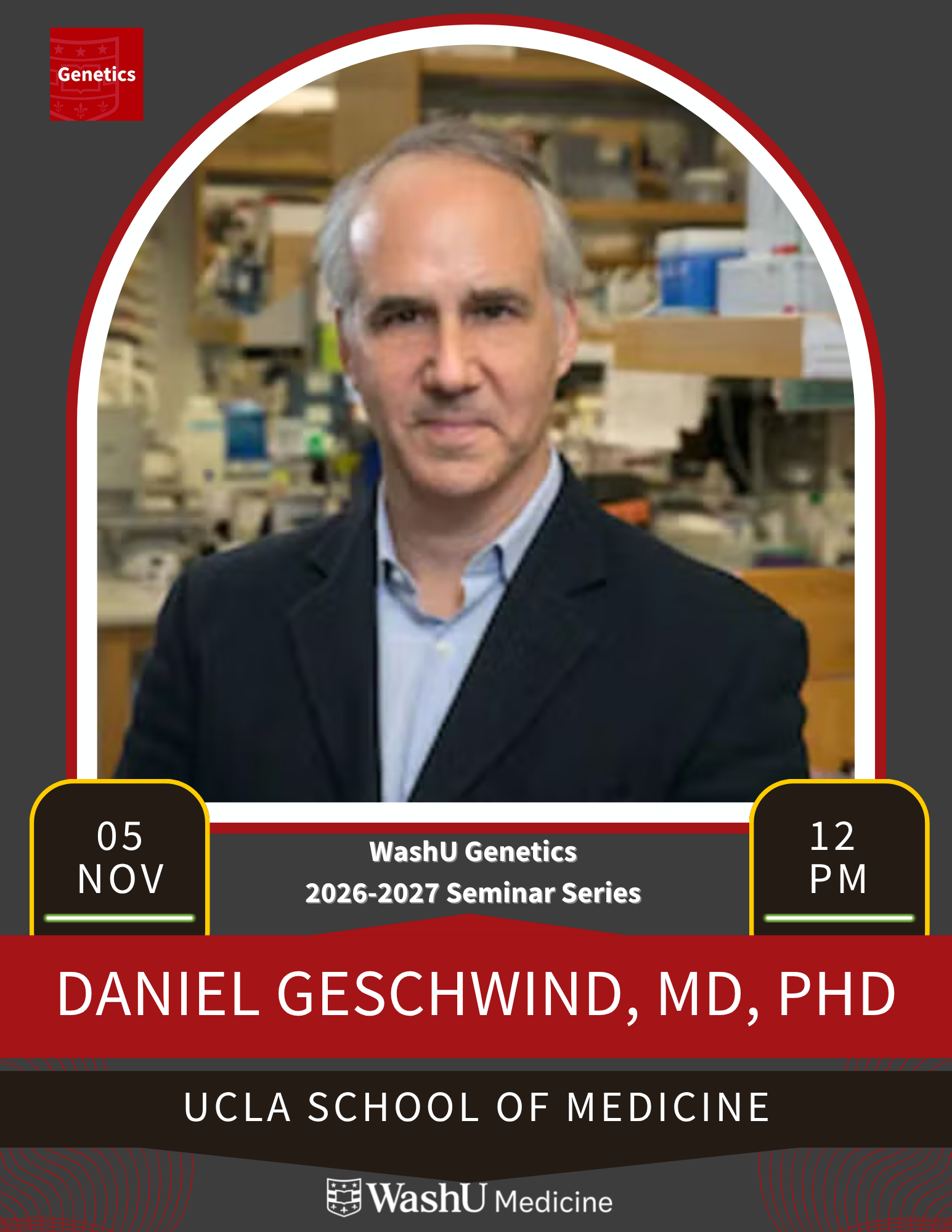
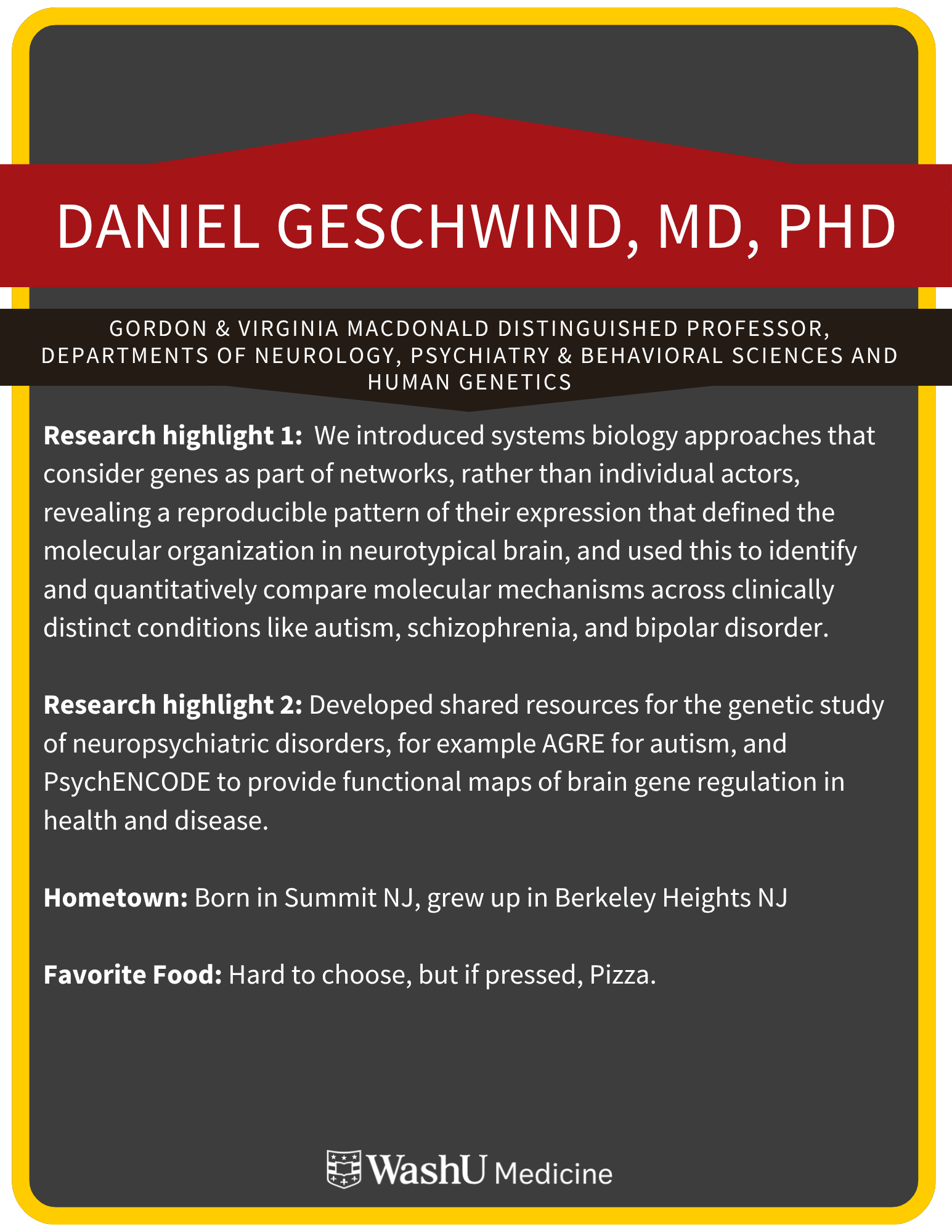
Daniel Geschwind, MD, PhD
Gordon & Virginia MacDonald Distinguished Professor,
Departments of Neurology, Psychiatry & Behavioral Sciences and Human Genetics,
Co-Director, Center for Neurobehavioral Genetics
Director, UCLA Center for Autism Research and Treatment
Senior Associate Dean & Associate Vice Chancellor, Precision Health
Director, Institute for Precision Health
UCLA School of Medicine
Talk Title: Translating the autism genome through genomics and high-throughput iPSC phenotyping: towards precision therapeutics
Abstract: Three decades of genetic studies in autism spectrum disorder (ASD) have identified over two hundred genes harboring rare risk mutations. These rare forms of ASD account for about 15% of cases, but combined with polygenic risk frame ASD, frame ASD as a highly heterogeneous condition with diverse genetic sources of susceptibility. Despite this substantial diversity, transcriptomic and epigenetic analyses have also identified convergent patterns of dysregulation across ASD post-mortem brain. Moreover, studies to identify the biological pathways, timing and location of susceptibility gene expression, suggest that their expression converges in developing neural progenitors and neurons during the period of cortical neurogenesis. Our work seeks to understand how developmental perturbations percolate through time to impact brain function after birth using stem cell models and high throughput biological assays.
Host: Dr. Joe Dougherty
Host Comments: For three decades, Dr. Dan Geschwind has been at the forefront of the integration of genomics and neuroscience. He has led large initiatives for gene discovery in neurodevelopmental disorders and neurodegeneration, as well as pioneering functional genomics approaches to understand the human brain throughout its developmental trajectory, in health and disease. He is currently lead on numerous major projects characterizing the consequences of autism gene mutation (SSPsygene), understanding the genetic architecture of autism across diverse populations (ACE Network), and gene regulation (PsychEncode).