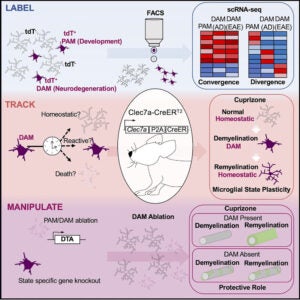
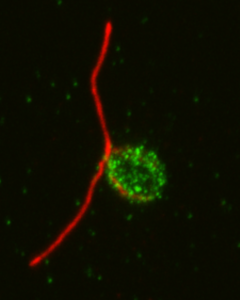
A recent study published in Immunity by the Li lab opens a new chapter for the study of microglial function in development and neurodegeneration with remarkable precision.
An inducible genetic tool developed by the Li lab to study microglial states
A recent study published in Immunity by the Li lab opens a new chapter for the study of microglial function in development and neurodegeneration with remarkable precision.
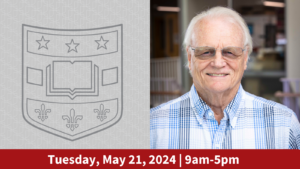
The Department of Genetics successfully hosted the Gary D. Stormo Symposium on Computational Biology on May 21, 2024! This event celebrated Dr. Gary D. Stormo and his achievements as a pioneer in computational biology, as well as his legacy as an inspiring mentor and educator. We had 11 renowned speakers who spoke on Dr. Stormo’s […]
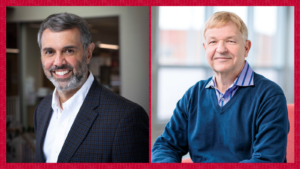
Every year the Office of Technology Management recognizes the previous year’s United States Patent and Trademark Office patent awardees. Genetics faculty Dr. Robi Mitra and Dr. Jeffrey Milbrandt were recognized for their 2023 patents and were awarded custom patent cubes.
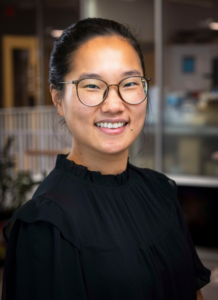
Julie Choi, graduate student
in the labs of Jeffrey Milbrandt and Peter Jin won the poster award at this year’s Hope Center Retreat. Her poster is titled: “Single-Cell Sciatic Nerve Atlas Unveils Il-1β+ Macrophages and T Cells as Drivers of Neurodegeneration in a SARMopathy Mouse Model”
Defects in motile cilia in humans cause the rare disease Primary Ciliary Dyskinesia (PCD), affecting approximately 1 in every 10,000 to 30,000 people. People who have PCD are characterized by recurrent respiratory infections, left-right asymmetry defects, ear infections, and infertility. Even with genome and exome sequencing, 30% of the patients still don’t have a gene […]
Election to AIMBE’s College of Fellows is limited to the top 2% of medical and biological engineers in these fields. Those elected are considered to have made outstanding contributions to engineering and medicine research, practice or education. Congratulations to Dr. Ting Wang for being inducted as an AIMBE fellow.
Each year the O’Leary Competition acknowledges the most original and important accomplishments in Neuroscience research at WashU by a predoctoral student or postdoctoral fellow. This year, Caitlin Dingwall, an MD/PhD student in the Milbrandt Lab won the prize along with Yun Chen, a graduate student in the Holtzman Lab!
Washington University School of Medicine in St. Louis received in 2023 the second highest amount of funding from the National Institutes of Health (NIH) of all medical schools nationwide. This ranking reflects the school’s commitment to cutting-edge research and positions it as a key player in shaping the future of medicine.
In the new paper published in Nature Reviews, “Towards targeting transposable elements for cancer therapy”, graduate students Xuan Qu and Yonghao Liang (Holden) summarized the latest research developments in the field. In this video, they talk about their research focus in Dr. Ting Wang’s lab.
In this paper, recently published in PLOS Computational Biology, Dr. Michael White, Associate Professor of Genetics and colleagues used a new AI learning package to model data generated with synthetic regulatory DNA elements to further the understanding of regulatory DNA.