Sex-specific epigenetic remodeling links acetate to memory enhancement
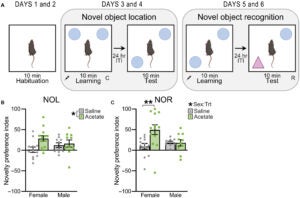
What if a simple metabolic byproduct could sharpen memory? Researchers at Washington University School of Medicine have discovered that acetate, a ubiquitous metabolite, can significantly enhance long-term memory in female mice by reshaping the epigenetic and transcriptional landscape of key learning centers. The findings, published in Science Signaling, reveal that memory enhancement can arise from subtle metabolic byproducts that interact with chromatin in sex- and context-specific ways.

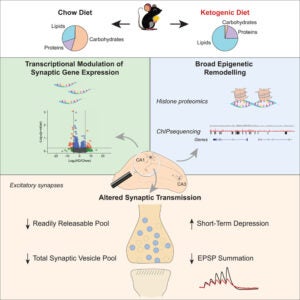
Researchers decode how a ketogenic diet modifies brain synaptic function

featured figure of the research

A collaborative research effort between laboratories at Washington University School of Medicine has identified molecular and cellular mechanisms by which a ketogenic diet (KD) alters synaptic communication in the brain — revealing how metabolic state can reshape neuronal networks at the transcriptional, epigenetic, and physiological levels. Spearheaded by first authors Marion Stunault, PhD, Pan-Yue Deng, PhD and Anjali Yadav, PhD, the study, “Ketogenic diet dampens excitatory neurotransmission by shrinking synaptic vesicle pools,” was recently published in Cell Reports and provides foundational insight into how diet-induced metabolic changes influence excitatory circuits in the hippocampus.