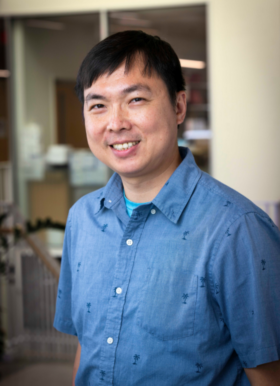
Sheng Chih (Peter) Jin, PhD

Sheng Chih (Peter) Jin, PhD

Assistant Professor of Genetics and Pediatrics

Google Scholar Profile | Jin Lab


Research Interests

We are currently working on the following areas of research:

Methods Development

Human diseases, particularly complex ones like congenital heart diseases, neurodevelopmental disorders, and rare undiagnosed conditions, arise from the intricate interplay of genetic and environmental factors. Conventional investigative approaches often rely on simplistic inheritance models, focusing solely on germline or somatic variations. This approach overlooks the intricate interrelationships between these elements. To bridge this knowledge gap, we are developing advanced computational tools and statistical models capable of identifying and characterizing complex inheritance patterns. These encompass single nucleotide variants, uniparental disomy, short tandem repeats, mobile element insertions, mitochondrial DNA variants, and other structural variations. Our goal is to integrate and analyze germline and somatic variants, leveraging multi-omics data such as short-read sequencing, long-read sequencing, transcriptomics, and proteomics. This comprehensive approach aims to redefine our understanding and approach to studying and addressing complex diseases.

Unravelling Molecular Signatures and Novel Therapeutic Targets for Idiopathic Peripheral Neuropathy

Idiopathic peripheral neuropathy (IPN), a result of damage to the peripheral nerves with unknown causes, is a debilitating, painful, and as-yet-untreatable condition. Due to the unknown origin of the damage and the lack of targeted therapy, treatment for patients with IPN revolves around mere symptom management. In collaboration with Drs. Jeffrey MilbrandtAhmet HokeAaron Di Antonio, and the Peripheral Neuropathy Patient Registry, we are integrating whole-genome sequencing and SOMAscan proteomic data in extreme IPN patients with negative clinical genetic screening results and performing bioinformatic analysis to identify variants, pathways, and biomarkers for pathophysiological clues to axon degeneration.

Genomic Research of Cerebral Palsy and Dystonia

In collaboration with Drs. Michael KruerCarlos Cruchaga, the Dystonia Coalition, and the Cerebral Palsy Research Network, we are applying an integrative, multidimensional omics approach to a large, well-phenotyped cerebral palsy/dystonia cohort to catalyze gene discovery, provide mechanistic insights into newly identified genetic causes, make genotype-phenotype correlations, and create a metadata ecosystem freely available to the cerebral palsy/dystonia community.

Human Genetics and Molecular Mechanisms of Human Neurological Diseases

In collaboration with Drs. Kristopher KahleKristen KrollJoe Dougherty, and the WashU Undiagnosed Diseases Network, we are focusing on studying the genetic underpinnings of rare Mendelian forms of human neurological diseases, using whole-genome sequencing, quantitative phenotyping, transcriptomic profiling, massively parallel reporter assays, and in vitro/in vivo models.

Latest News

Novel tool uncovers a common genetic cause of peripheral neuropathy 

Novel tool uncovers a common genetic cause of peripheral neuropathy  (Links to an external site)

Researchers at WashU Medicine and collaborating institutions have developed a novel computational tool that can accurately identify a genetic problem in a gene called RFC1 that is linked to certain forms of peripheral neuropathy. Peripheral neuropathy is one of the most common neurological disorders and can cause pain, sensory loss, imbalance and weakness. It affects 12–20% of all people in the U.S. and can affect up to 30% of adults over age 65. The new research is published in Annals of Neurology.
Zefan (Vivien) Li Named WashU Pivot 314 Fellow

Zefan (Vivien) Li Named WashU Pivot 314 Fellow

Zefan (Vivien) Li, a third-year graduate student in the Jin lab, has been selected for the 2026 cohort of Washington University in St. Louis’s Pivot 314 Fellowship, a competitive program that supports emerging leaders across disciplines.
Graduate student Emma Casey awarded NINDS Diversity Supplement

Graduate student Emma Casey awarded NINDS Diversity Supplement

Emma Casey, a second year PhD student in the Jin lab has been awarded a highly competitive NINDS Diversity Supplement to work on characterizing and assessing the impact of mitochondrial DNA variations in congenital hydrocephalus. Emma is the first trainee from the Department of Genetics to receive the significant 3-year NIH grant award totaling $225K. Congratulations!