Research could reveal new therapeutic targets for alcohol use disorder
Gabor Egervari, MD, PhD, has received his first R01 grant from the National Institutes of Health (NIH) to investigate how metabolites of alcohol alter gene regulation in the brain and contribute to behaviors associated with alcohol use disorder.

The award marks an important milestone for Egervari, a principal investigator in the Department of Genetics and Department of Biochemistry and Molecular Biophysics at Washington University School of Medicine in St. Louis, as he continues to build his independent research program.
“This is a very important milestone for me as a new PI that will enable me to continue growing my team and research program,” Egervari said. “This R01 has been years in the making and is an indication that NIH recognizes the high priority of our research goals.”
Looking beyond alcohol
Despite decades of research into how alcohol affects the brain, effective treatments for alcohol use disorder remain limited. Egervari believes researchers have largely overlooked an important part of the process: what happens when alcohol is metabolized in the body.
“Alcohol and other substances are quickly metabolized following intake,” he said. “We have evidence to suggest that alcohol metabolites are neuroactive and it is critical to understand their functional roles to develop more efficacious treatments.”
The new R01 will focus on acetate, a metabolite produced during the breakdown of alcohol in the liver. Egervari and his team will investigate how alcohol-derived acetate influences histone acetylation, an epigenetic mechanism that regulates gene activity in cells. They also will examine differences between males and females to better understand how the brain responds differently to alcohol and its metabolites.
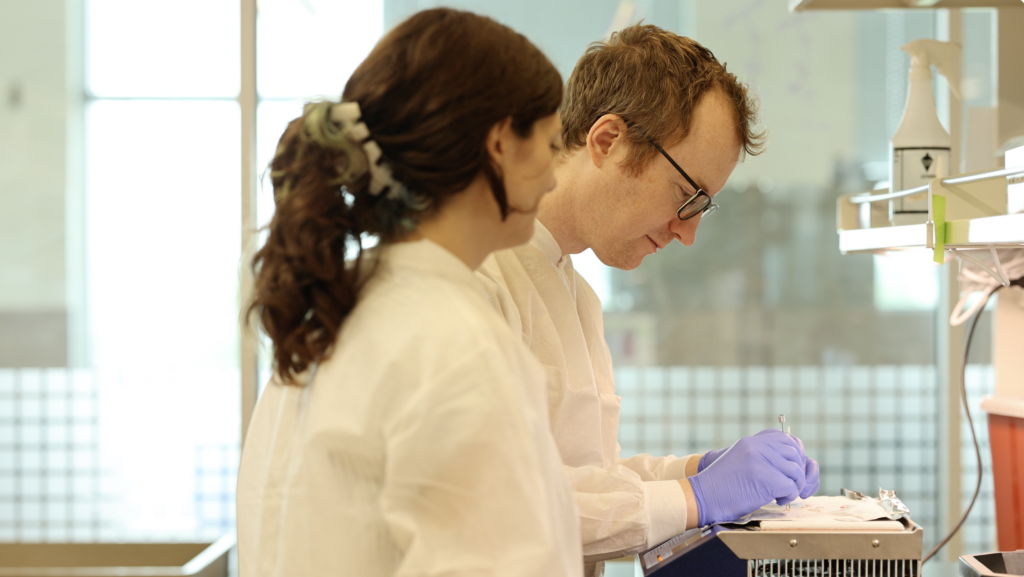
Early findings from Egervari’s laboratory have provided promising evidence for this approach. In mouse models, blocking an enzyme that converts alcohol-derived acetate into acetyl-CoA reduced voluntary alcohol consumption.
“This suggests that alcohol metabolites play a key role in drinking behavior,” Egervari said. “We are therefore very excited to further explore these mechanisms and help realize their therapeutic potential.”
The R01 will allow the team to investigate these mechanisms in greater detail, including identifying nuclear proteins affected by alcohol-derived acetate and determining how these interactions alter gene expression.
Ultimately, Egervari hopes the work will uncover new therapeutic targets for alcohol use disorder.
“By establishing the functional role of alcohol metabolites and by uncovering novel ways to reverse the effects of alcohol-derived acetate on the brain, our findings have the potential to outline a previously unknown aspect of alcohol neurobiology and result in radically new treatment modalities,” he said.
A milestone for the lab
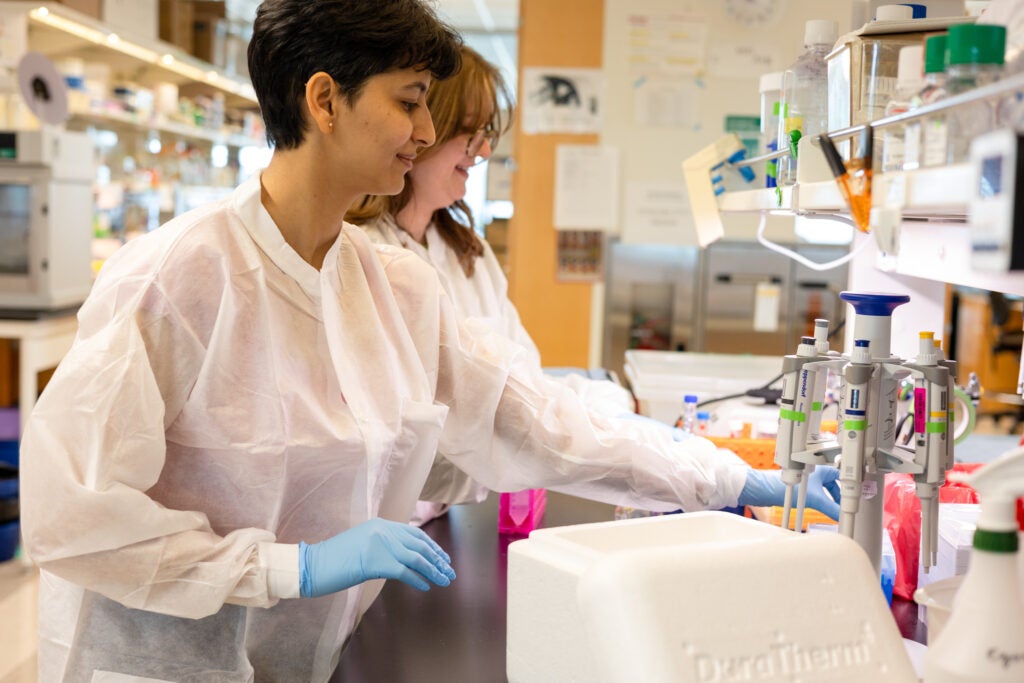
For Egervari, receiving the R01 was also a moment to celebrate with the team that helped make the research possible.
“Sharing the news with lab members is an unforgettable moment,” he said. The lab celebrated with champagne and a visit to one of their favorite St. Louis restaurants.
Egervari credits his lab members, colleagues in the Departments of Genetics and Biochemistry, mentors and collaborators for their support.
“It really takes a village,” he said. “Our success is a reflection of the incredibly supportive environment here at WashU and in the field at large.”
With the support of the R01, Egervari and his team will continue exploring the connections between metabolism, epigenetic regulation and behavior, with the ultimate goal of developing new approaches to treating alcohol use disorder.