Yang (Eric) Li, PhD, receives first R35 to interpret human genetic variants via AI/ML and comparative genomics
Li poster

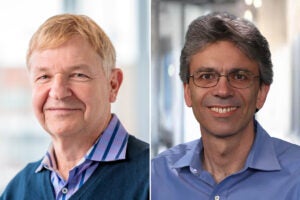
Yang (Eric) Li, PhD, an assistant professor of genetics and neurosurgery at Washington University School of Medicine in St. Louis, has received a five-year Maximizing Investigators’ Research Award (MIRA, R35) from the National Institutes of Health, to develop computational approaches for understanding how gene regulation differs between humans and animal models and how those differences may affect the study of human disease.

The 3rd Gary D. Stormo Computational & Systems Biology Lecture and 2026 Stormo Fellow

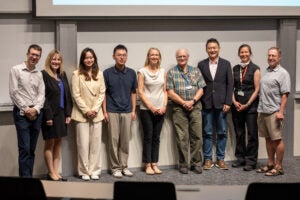
The Department of Genetics recently hosted the 3rd Gary D. Stormo Computational & Systems Biology Lecture, honoring Dr. Gary Stormo’s pioneering contributions to computational biology. This year’s lecture featured Polly Fordyce, PhD, professor of Genetics and Bioengineering at Stanford University, who presented a talk titled “Understanding gene regulation using high-throughput biophysics.” The department also announced Qichen Fu as the recipient of the 2026 Stormo Fellowship in Computational and Systems Biology. Fu is a graduate student in the laboratory of Dr. Ting Wang.

Postdoc Profile: Holly Godin

Below we are going to delve into Holly Godin’s background, hobbies and research aspirations. What are you investigating? I’m a postdoc in Dr. Mike Meers’ lab, where I study the binding logic of pioneer transcription factors. Pioneer transcription factors are a unique class of transcription factors that can bind closed chromatin by targeting nucleosomes, allowing […]

Obituary: Guoyan Zhao, associate professor of genetics, neurology, 53 (Links to an external site)

Guoyan Zhao, an associate professor of genetics and of neurology at Washington University School of Medicine in St. Louis, died Friday, May 15, 2026. She was 53. Zhao was highly regarded for harnessing the tools of computational biology, genomic sequencing and single-cell analysis to shed light on neurological and neurodegenerative diseases, including Alzheimer’s disease, Parkinson’s disease, Huntington’s disease and chronic pain.

DNA damage can trigger neurons to self-destruct

Milbrandt, DiAntonio

WashU Medicine researchers identified key details in how DNA damage can flip a nerve cell’s self-destruct switch. The new study could lead to novel routes to preventing neurodegeneration in a variety of diseases.

Frederick “Eric” Arnold, PhD and Collaborators Receive Longitude Prize on ALS Discovery Award

Frederick “Eric” Arnold, PhD, an assistant professor of Genetics and collaborators from the University of Idaho have been selected to receive a £100,000 Discovery Award through the Longitude Prize on ALS, an international initiative focused on accelerating the discovery of new treatments for amyotrophic lateral sclerosis (ALS) using artificial intelligence.

Novel tool uncovers a common genetic cause of peripheral neuropathy  (Links to an external site)

Researchers at WashU Medicine and collaborating institutions have developed a novel computational tool that can accurately identify a genetic problem in a gene called RFC1 that is linked to certain forms of peripheral neuropathy. Peripheral neuropathy is one of the most common neurological disorders and can cause pain, sensory loss, imbalance and weakness. It affects 12–20% of all people in the U.S. and can affect up to 30% of adults over age 65. The new research is published in Annals of Neurology.

Turan Tufan, PhD, Receives Prestigious Helen Hay Whitney Fellowship

Turan Tufan, PhD, a postdoctoral researcher in Ting Wang’s lab has been awarded a highly competitive three-year fellowship from the Helen Hay Whitney Foundation, recognizing his exceptional promise as an early-career scientist and supporting his innovative research in biomedical science.