Follow us
Stay informed about what’s happening in the Genetics Department by following us on LinkedIn: @WashUGenetics, Twitter: @WashUGenetics and Bluesky: @washugenetics.bsky.social
News
Dr. Guoyan Zhao selected for the Hope Center Pilot Grant
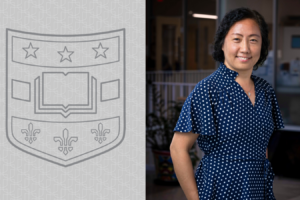
Congratulations to Dr. Guoyan Zhao and co-investigator Dr. Hiroko Yano for being selected for the Hope Center Pilot Grant! The project “Identification and validation of drug candidates for repurposing in Huntington disease” will be funded in full $100,000 for the award period of January 1, 2025 – December 31, 2026!
Graduate student Emma Casey awarded NINDS Diversity Supplement
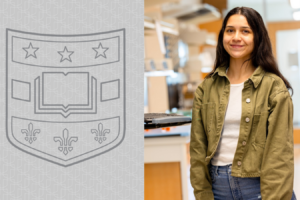
Emma Casey, a second year PhD student in the Jin lab has been awarded a highly competitive NINDS Diversity Supplement to work on characterizing and assessing the impact of mitochondrial DNA variations in congenital hydrocephalus. Emma is the first trainee from the Department of Genetics to receive the significant 3-year NIH grant award totaling $225K. Congratulations!
$14 million supports work to diversify human genome research (Links to an external site)

Washington University School of Medicine in St. Louis has received two large grants renewing funding for the Human Pangenome Reference Sequencing Project. This ambitious program began in 2019 with the goal of increasing the diversity of human genome sequences that are pooled into the widely used reference genome. A thorough representation of human genetic diversity can help researchers discover how genetic variation contributes to disease and perhaps offer new routes to innovative treatments.
Congratulations to Yung-Chun (David) Wang in the Jin lab for receiving the Center of Regenerative Medicine’s hCTO microgrant
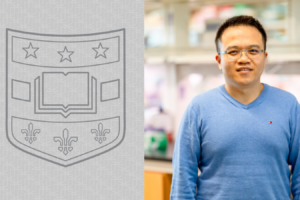
Yung-Chun (David) Wang, PhD, an instructor in the Jin lab was recently awarded the Center of Regenerative Medicine’s hCTO microgrant. This microgrant will support his research into congenital hydrocephalus (CH), a developmental brain disorder characterized by abnormal cerebrospinal fluid accumulation.
Ting Wang, PhD and researchers have identified a possible way to make glioblastoma cells vulnerable to different types of immunotherapy (Links to an external site)

Researchers at WashU Medicine have identified a possible way to make glioblastoma cells vulnerable to different types of immunotherapy. The strategy, which they demonstrated in cells in the lab, forces brain cancer cells to display targets for the immune system to attack.
Upcoming Events
-
9
Apr -
15
Apr -
16
Apr -
22
Apr -
23
Apr