Follow us
Stay informed about what’s happening in the Genetics Department by following us on LinkedIn: @WashUGenetics, Twitter: @WashUGenetics and Bluesky: @washugenetics.bsky.social
News
Yang (Eric) Li, PhD, receives first R35 to interpret human genetic variants via AI/ML and comparative genomics
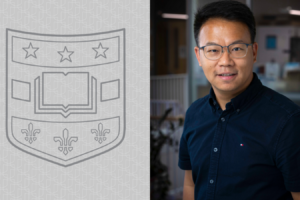
Yang (Eric) Li, PhD, an assistant professor of genetics and neurosurgery at Washington University School of Medicine in St. Louis, has received a five-year Maximizing Investigators’ Research Award (MIRA, R35) from the National Institutes of Health, to develop computational approaches for understanding how gene regulation differs between humans and animal models and how those differences may affect the study of human disease.
“Tristan” Qingyun Li, PhD receives $3 million R01 to investigate how microglia change during Alzheimer’s disease

The new research will focus on understanding how disease-associated microglia change over time and how these changes may contribute to Alzheimer’s disease progression, potentially revealing new opportunities for therapeutic designs.
The 3rd Gary D. Stormo Computational & Systems Biology Lecture and 2026 Stormo Fellow
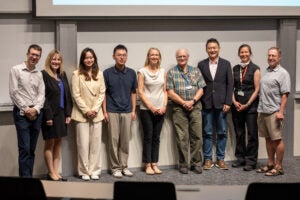
The Department of Genetics recently hosted the 3rd Gary D. Stormo Computational & Systems Biology Lecture, honoring Dr. Gary Stormo’s pioneering contributions to computational biology. This year’s lecture featured Polly Fordyce, PhD, professor of Genetics and Bioengineering at Stanford University, who presented a talk titled “Understanding gene regulation using high-throughput biophysics.” The department also announced Qichen Fu as the recipient of the 2026 Stormo Fellowship in Computational and Systems Biology. Fu is a graduate student in the laboratory of Dr. Ting Wang.
Gabor Egervari, MD, PhD receives first R01 to investigate how alcohol metabolites affect the brain
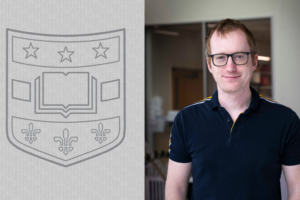
Gabor Egervari, MD, PhD, has received his first R01 grant from the National Institutes of Health (NIH) to investigate how metabolites of alcohol alter gene regulation in the brain and contribute to behaviors associated with alcohol use disorder.
Obituary: Guoyan Zhao, associate professor of genetics, neurology, 53 (Links to an external site)
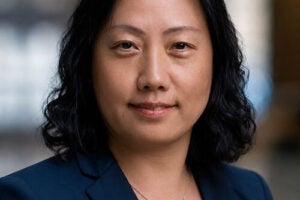
Guoyan Zhao, an associate professor of genetics and of neurology at Washington University School of Medicine in St. Louis, died Friday, May 15, 2026. She was 53. Zhao was highly regarded for harnessing the tools of computational biology, genomic sequencing and single-cell analysis to shed light on neurological and neurodegenerative diseases, including Alzheimer’s disease, Parkinson’s disease, Huntington’s disease and chronic pain.
Upcoming Events
-
28
Oct -
29
Oct -
4
Nov -
5
Nov -
11
Nov