From deciphering underlying genetic factors of diseases to developing cutting-edge genome technology, our scientists are making impactful discoveries everyday.
Strength in Genetics and Genomics Research
The Department of Genetics has traditional strengths in computational biology and genome science, as well as model organism, evolutionary and human genetics. Recent specialties include neurological disorders, cellular bioenergetics, epigenomics, personalized medicine and genome technology development.
We have established leadership in the following flagship NIH genomic medicine themed projects:
- The Human Pangenome Project (NHGRI)
- The Impact of Genetic Variation on Function (NHGRI)
- The Long Life Family Study (NIA)
- Somatic Mosaicism across Human Tissues (NIH Common Fund)
- Multi-Omics for Health and Disease (NHGRI, NCI, NIEHS)
- The BRAIN (The Brain Research through Advancing Innovative Neurotechnologies) Initiative Cell Atlas Network (NIMH)
Within the close-knit research community of Washington University School of Medicine, our scientists are supported by a strong foundation. School of Medicine Facts & Figures
| #2 NIH Funding (2023) | $838.3 Million Research Funding 2022 | 19 Nobel Laureates |
Latest News
WashU Medicine Genetics Ranks No. 5 in NIH Funding for 2025
The Department of Genetics at Washington University School of Medicine in St. Louis has been ranked No. 5 in the nation for NIH funding in 2025, according to the latest report from the Blue Ridge Institute for Medical Research. The achievement places WashU Medicine’s genetics department among the nation’s most well-funded hubs of genetic discovery, ahead of many prestigious research institutions.
Guoyan Zhao, PhD, delivers Dutcher Tenure Recognition Seminar
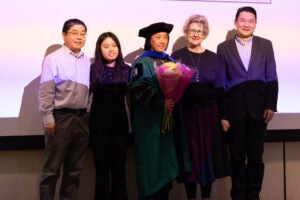
The Department of Genetics Seminar Series continued on Thursday, February 26, with the Dutcher Tenure Recognition Seminar, featuring an in-person presentation by Guoyan Zhao, PhD, Associate Professor with Tenure in the Department of Genetics at WashU Medicine. Held in Moore Auditorium, the event brought together faculty, trainees, and staff to celebrate Dr. Zhao’s promotion and scientific accomplishments.
The Dutcher Tenure Recognition Seminar is a long-held tradition in the Department of Genetics, honoring faculty members upon their promotion to tenure. The seminar recognizes not only their research excellence, but also their contributions to mentorship, scholarship, and the academic community.
Sex-specific epigenetic remodeling links acetate to memory enhancement
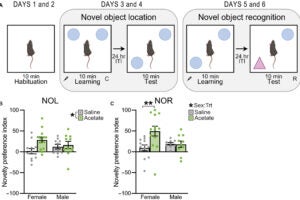
What if a simple metabolic byproduct could sharpen memory? Researchers at Washington University School of Medicine have discovered that acetate, a ubiquitous metabolite, can significantly enhance long-term memory in female mice by reshaping the epigenetic and transcriptional landscape of key learning centers. The findings, published in Science Signaling, reveal that memory enhancement can arise from subtle metabolic byproducts that interact with chromatin in sex- and context-specific ways.